




Background
Meyer operates in Singapore's regulated lift industry, where BCA (Building and Construction Authority) registration is a hard trust signal — the kind of credential prospective buyers actively search for before shortlisting a contractor. The commercial target was a high-intent, credential-led query: “BCA registered lift contractor.”
The opportunity was clear. The obstacle was less obvious: the site had a source-context problem. The brand entity wasn't described with the accurate, machine-readable attributes that let search engines — and now generative AI systems — reliably recognize what Meyer is and what it is qualified to do.
The Challenge
To surface a brand inside AI Overviews and answer engines, the source (the website) has to state the entity's attributes clearly and truthfully, so the engine can extract, verify, and reuse them with confidence.
Meyer's existing context under-specified the brand. The link between the central entity (Meyer) and its defining real-world attribute (BCA-registered lift contractor), along with its adjacent service attributes, wasn't explicit or consistent enough for dependable extraction. In generative-search terms: the entity existed, but it wasn't legible.
The Approach
- 1
Corrected the source context
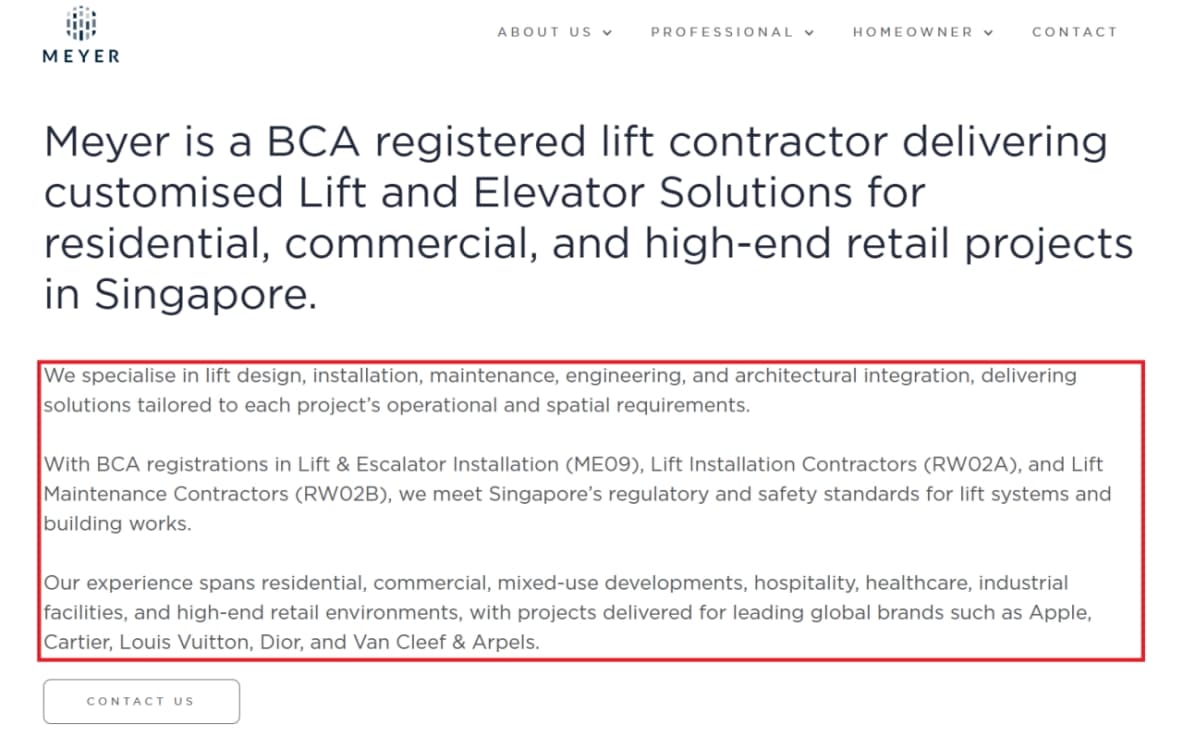
Audited how the brand entity was being described and re-established it with contextual attributes carrying true attribute values. “True” is the operative word: generative systems reward attributes that are verifiable and internally non-contradictory, and penalize context that can't be confirmed. The goal was an accurate, consistent definition of the entity at the source.
- 2
Established the brand entity
Tied the central entity (Meyer) directly to its defining attribute — BCA registered lift contractor — so search and generative layers could attribute the credential back to the brand cleanly.
- 3
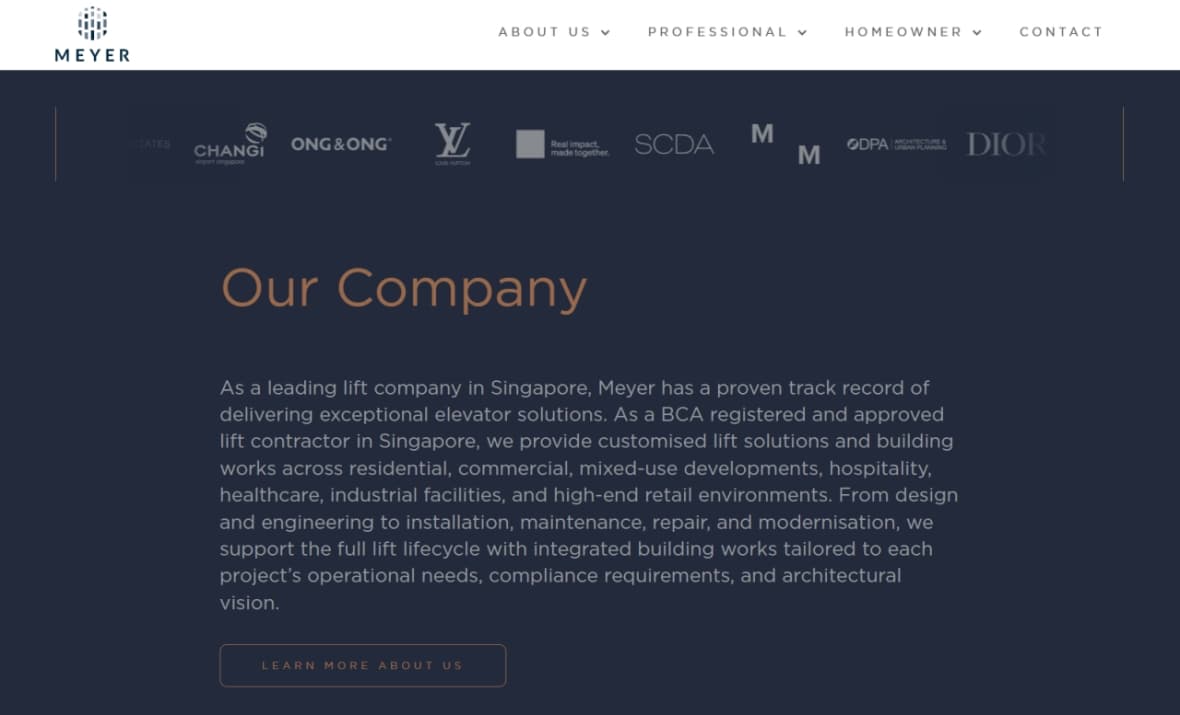
Expanded the keyword scope inside the “Our Company” section
Rather than treating the query as a landing-page target to optimize in isolation, the predicate was introduced within an entity-describing section (“Our Company”). This expands the context around the brand, connecting the brand entity to the service attribute in a natural attribute–value structure — the pattern generative systems parse most reliably.
- 4
Reinforced page-level context signals
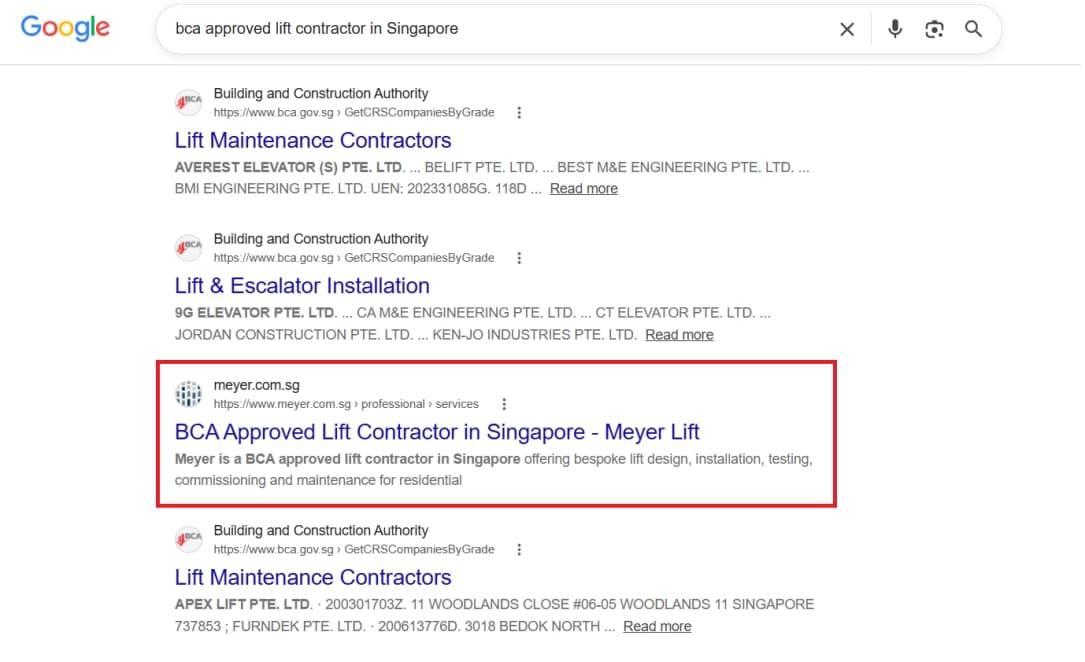
Added the target keyword to the meta title, aligning the page's context signal with the on-page entity context so both point to the same thing.
The Results
Recognized as an entity inside Google's AI Overview
Google Singapore's AI Overview now surfaces Meyer for lift-contractor queries and associates it with the sub-attribute values “Lift Maintenance Contractors” and “Lift Installation Contractors.” This is the clearest possible proof that the corrected source context was successfully extracted and reused by Google's generative layer — the engine didn't just index the page, it understood the entity and its sub-services.
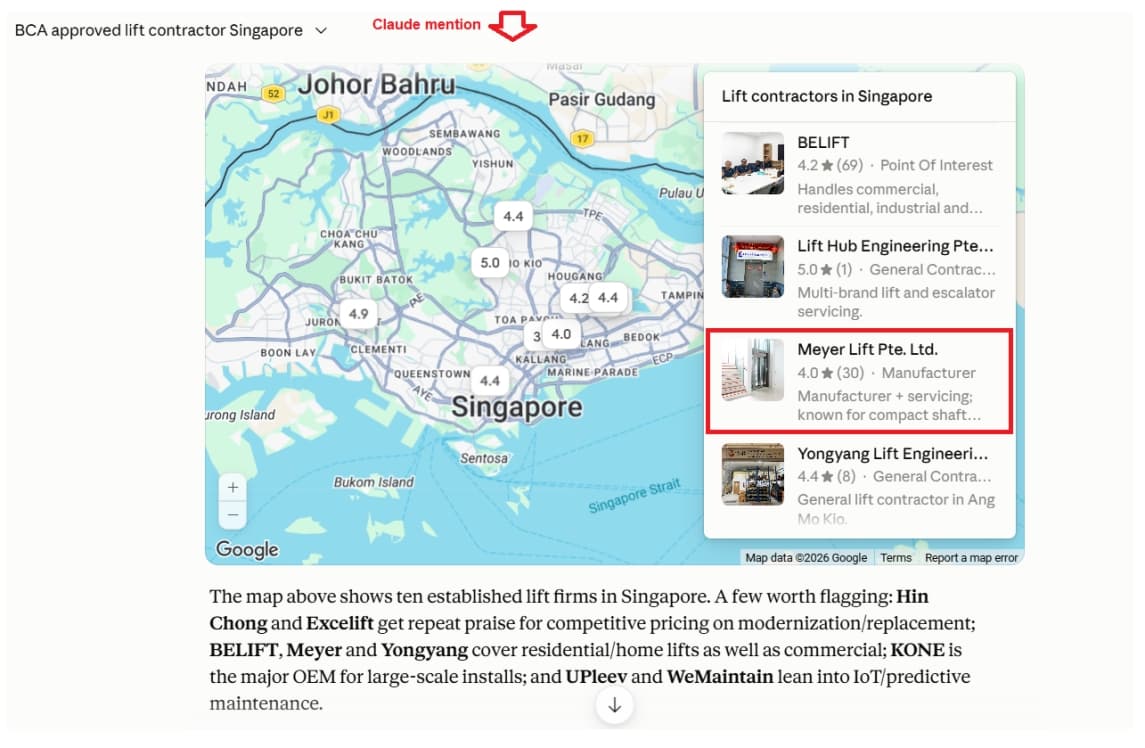
Cited across generative engines — including Claude
The result isn't confined to one platform. Asked “I am looking for a BCA approved lift contractor in Singapore,” Claude also surfaces meyer.com.sg as a recommendation. When a corrected source context earns citations from more than one generative engine, it confirms the win is happening at the entity level at the source — engine-agnostic — rather than being tuned to a single algorithm.
Top 3 organic rankings, sustained
The site has held top-3 positions for “BCA registered lift contractor” since April 2026 — durable placement rather than a temporary spike.
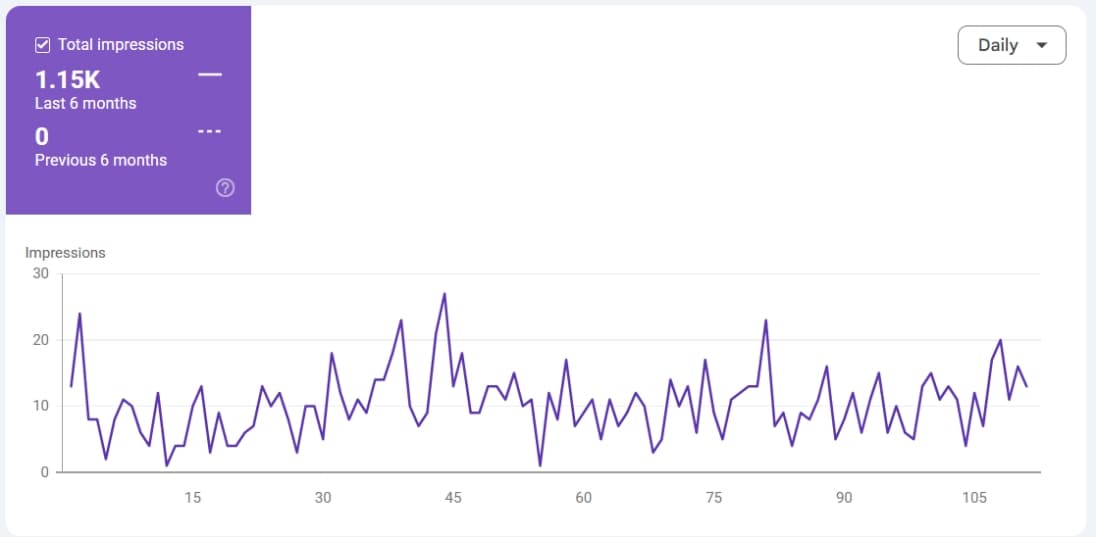
Generative-AI impressions: 0 → 1.15K
Impressions from Google's generative AI features rose from 0 in the previous six months to 1.15K in the last six months — a presence that simply did not exist before the source context was corrected.
Why It Matters
Appearing in an AI Overview isn't luck, and it isn't a keyword trick. It's the downstream effect of getting the entity and its attributes right at the source. By correcting the source context and expanding it with true, verifiable attribute values, we moved Meyer from invisible in generative results to a recognized entity with cited sub-attributes — and, tellingly, that recognition now spans both Google's AI Overview and Claude. Being cited by more than one generative engine is the signal that matters: it means the entity is legible at the source, not fitted to a single algorithm.
For the Singapore market specifically, this project demonstrates that PGrowth by Pixart can execute GEO and AEO — not just classic blue-link SEO — and produce measurable presence inside Google's AI-driven surfaces.
The takeaway for credential-led brands
If your business is defined by a credential your buyers ask AI assistants about — “who is a BCA-registered lift contractor?” — the winning move is to make your source context extractable and true. Define the entity accurately, connect it to its real attributes, and let the generative layer do the rest. That's the work.
